
Last Updated: October 26, 2026
Quick Summary
Professional exterior remodeling is a strategic investment that protects your home’s structural integrity, prevents costly water damage, and improves energy efficiency through licensed expertise, quality materials, proper permits, and warranty protection that DIY work cannot provide.
- Professional contractors carry liability insurance, workers’ compensation, and bonding, protecting you from injury liability and ensuring code-compliant work.
- Roof replacement takes 2-5 days, siding replacement takes 1-2 weeks, and comprehensive exterior remodels take 4-8 weeks with professional coordination.
- Modern double or triple-pane windows with professional installation reduce heat loss in winter and heat gain in summer, with energy payback periods of 7-15 years.
- Professional work typically includes 5-10 year warranty coverage on materials and labor, while DIY work has no recourse if problems arise later.
- Verify contractor licensing, insurance, references from similar projects, and get itemized estimates in writing before starting work.
Table of Contents
- When Professional Exterior Remodeling Delivers Real Value
- Exterior Remodeling Cost: What You Actually Pay for Professional Work
- DIY vs. Professional Exterior Remodeling: Where Professionals Win
- How Curb Appeal and Home Value Connect to Your Bottom Line
- Exterior Remodel Timeline: Why Speed Matters (and When It Doesn’t)
- Energy Efficiency and Long-Term Savings from Quality Installation
- How to Choose an Exterior Remodeling Contractor You Can Trust
- Getting Your Free Estimate and Moving Forward
- Frequently Asked Questions
When Professional Exterior Remodeling Delivers Real Value
Professional exterior remodeling is more than a cosmetic upgrade, it’s a strategic investment in your home’s longevity and functionality. At Sunset Restoration, we work with homeowners facing a critical decision: tackle exterior work themselves or hire a professional contractor.
The core question isn’t whether you can do some of this work yourself, but whether the trade-offs, time, risk, quality, and warranty protection, make sense for your situation. A professional contractor brings licensed expertise, quality materials, proper permits, and accountability.
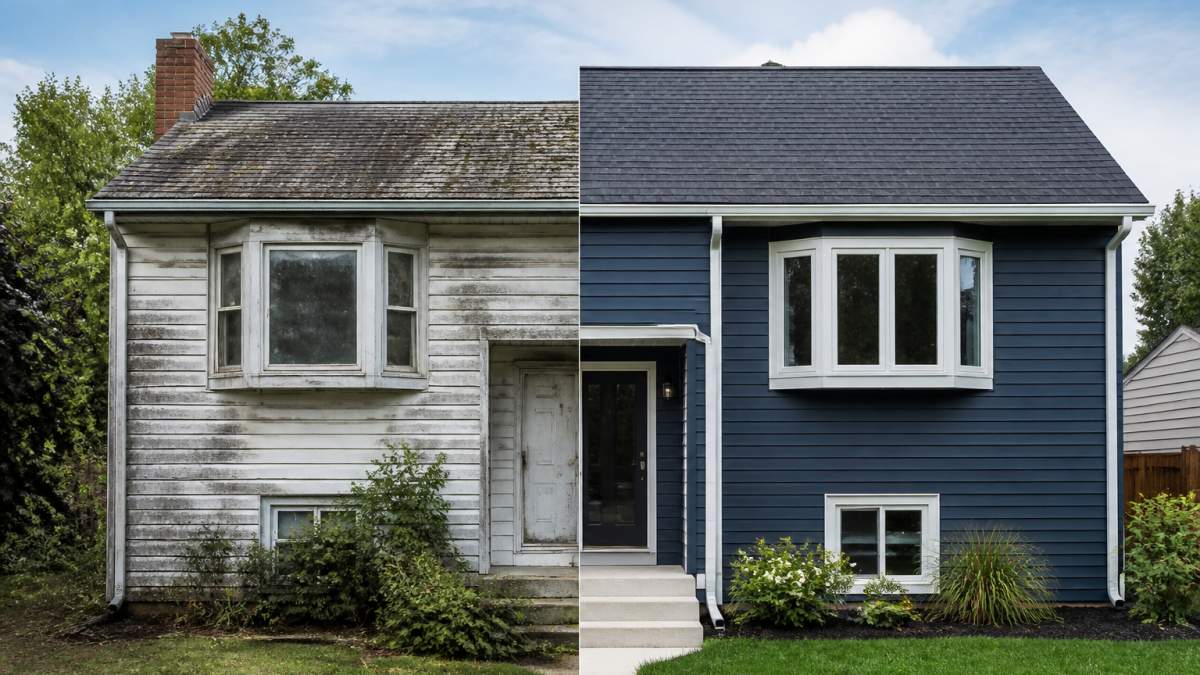
What separates a worthwhile exterior remodeling project from one that drains your budget: clarity on what you’re paying for, realistic expectations about timeline and disruption, and honest assessment of your own capability. Professional work protects structural integrity, prevents water intrusion that leads to costly interior damage, and improves energy efficiency.
Exterior Remodeling Cost: What You Actually Pay for Professional Work
Understanding exterior remodeling cost requires breaking down where your money goes: materials, labor, permits, project management, and warranty coverage.
Materials represent a substantial portion of project cost. Quality siding, roofing, windows, and gutters vary dramatically in durability.
Labor costs reflect the contractor’s experience, licensing, and insurance. A licensed professional carries liability insurance, workers’ compensation, and bonding, follows building codes, and obtains permits. These protections ensure work meets safety standards and can be inspected.
Permits and inspections add to the bill but ensure work meets code, protects your property value, and is documented for insurance claims.
Project management is an invisible cost homeowners underestimate. A professional contractor schedules subcontractors, manages material delivery, handles weather delays, and ensures quality at each phase. DIY coordination requires significant time and risks sequencing errors.
| Cost Component | Professional Contractor | DIY Approach |
|---|---|---|
| Materials | Quality-sourced, warrantied | Variable quality, no warranty |
| Labor | Licensed, insured, permitted | Your time + learning curve |
| Permits & Inspections | Included, code-compliant | Often skipped, creates liability |
| Project Management | Coordinated timeline | Your coordination effort |
| Warranty & Accountability | 5-10 year coverage typical | No recourse if problems arise |
| Insurance Coverage | Protected by contractor’s coverage | Your liability if injury occurs |
The real cost of professional exterior remodeling isn’t just the invoice, it’s the protection that comes with licensed work, proper documentation, and accountability. When something goes wrong months later, you have recourse. With DIY, you’re on your own.
DIY vs. Professional Exterior Remodeling: Where Professionals Win
DIY exterior remodeling appeals to homeowners looking to save money, but professional contractors win in specific, measurable ways that often outweigh the savings.
Quality and durability: Professional installation directly impacts how long your exterior work lasts. Roofing requires proper flashing, ventilation, and fastening patterns. Siding needs accurate measurements and sealing at joints.
Building code compliance: Exterior work is governed by building codes that specify materials, installation methods, and safety requirements.
Speed and efficiency: A professional crew completes work faster than a homeowner learning as they go. Time matters when your roof is open during rain or your siding is half-removed.
Insurance and liability: Professional contractors carry liability insurance and workers’ compensation. If someone is injured during DIY work, you’re liable. If a professional’s work causes damage, their insurance covers it.
Warranty protection: Professional work typically includes a warranty on materials and labor. DIY work has no warranty. If something fails, you pay to fix it.
DIY makes sense only for minor repairs, simple maintenance, or non-structural work where mistakes don’t create safety or durability issues.
How Curb Appeal and Home Value Connect to Your Bottom Line
Curb appeal influences buyer perception and home value. Professional exterior remodeling directly improves curb appeal through visible upgrades: new siding, fresh paint, updated windows, and well-maintained roofing.
The connection between curb appeal and resale value is real but often overstated. A home with excellent curb appeal and poor interior condition won’t sell for more, while a home with strong bones but a neglected exterior will underperform.
Professional exterior remodeling that improves curb appeal includes:
- Siding replacement (modern materials, clean appearance)
- Exterior painting (fresh, cohesive color scheme)
- Roofing (new roof signals structural integrity)
- Windows (updated style, improved performance)
- Gutters and trim (polished, well-maintained appearance)
These upgrades create a cumulative effect. A home with new siding, fresh paint, updated windows, and a modern roof looks substantially better than one with aging original materials, translating to buyer interest and competitive positioning.
Return on investment varies by project type and market. A roof replacement is largely non-discretionary, buyers expect a functional roof, so replacing a failing one prevents a discount but doesn’t command a premium.
The practical value for resale: exterior remodeling removes objections and improves buyer perception. It rarely generates a dollar-for-dollar return, but it prevents the discount that comes with deferred maintenance and poor curb appeal.
Exterior Remodel Timeline: Why Speed Matters (and When It Doesn’t)
The timeline for professional exterior remodeling varies dramatically by project scope. A roof replacement typically takes 2-5 days. Siding replacement takes 1-2 weeks. A comprehensive exterior remodel combining multiple projects takes 4-8 weeks.
Speed matters when your roof is leaking or siding is failing, since every day of delay risks interior water damage and accelerating deterioration.
Speed doesn’t always matter. If you’re planning an exterior remodel as part of a broader home improvement, timeline flexibility reduces costs. Contractors offer better pricing for projects they can schedule during slower seasons.
Weather delays are inevitable: roofing can’t happen in heavy rain, and exterior painting requires dry conditions.
One critical consideration: explore specific exterior remodeling options to understand what professional work entails. Different project types have different timelines and disruption levels. Understanding what’s involved helps you plan realistically.
Rushing exterior work creates quality problems: a roof installed too quickly often has improper fastening or flashing, and rushed siding may have gaps or poor sealing.
Energy Efficiency and Long-Term Savings from Quality Installation
Professional exterior remodeling improves energy efficiency through better insulation, reduced air leakage, and improved thermal performance. These improvements reduce heating and cooling costs over time.
Windows are the most visible energy upgrade. Modern double or triple-pane windows with low-emissivity coatings reduce heat loss in winter and heat gain in summer (EERE Success Story, Performance Validation of Low-e Storm Windows Paves Way for Market…).
Siding replacement offers less direct energy benefit but improves the overall thermal envelope by reducing air leakage and improving moisture management. Roofing affects attic temperature but has only indirect impact on heating and cooling efficiency.
The long-term savings from energy efficiency improvements depend on your climate, current home condition, and energy costs. In colder climates with high heating costs, window and insulation improvements generate meaningful savings. In moderate climates, energy savings are modest.
Professional installation is critical for energy performance. A properly installed window or weatherstripped door performs as rated. Improper installation undermines performance significantly.
How to Choose an Exterior Remodeling Contractor You Can Trust
Selecting a qualified contractor is the most important decision in your exterior remodeling project.
Key criteria for evaluating contractors:
Licensing and insurance: Verify the contractor holds appropriate licenses for your state and region. Confirm they carry liability insurance and workers’ compensation. Request certificates of insurance. This protects you if someone is injured or property is damaged during work.
Experience and references: Ask for references from similar projects completed in the last 2-3 years. Ask previous customers about quality, timeline, communication, and how the contractor handled problems or changes.
Clear communication: A good contractor explains scope, timeline, and cost clearly, answers questions directly, and provides written estimates and contracts specifying materials, labor, timeline, and warranty.
Insurance claim expertise: If you’re working with insurance coverage, the contractor should have experience with claims. They should understand the process, work with adjusters, and advocate for appropriate coverage. Learn how to avoid contractor communication issues to ensure clarity throughout the process.
Transparent pricing: Request itemized estimates breaking down materials, labor, and other costs, and compare multiple contractors.
Local reputation: Check online reviews, Better Business Bureau ratings, and community reputation. Ask neighbors and local suppliers about the contractor. A contractor with strong local reputation has incentive to maintain it.
Warranty and accountability: Understand the warranty on materials and labor. A reputable contractor typically offers coverage. Get warranty terms in writing. Understand what’s covered and how claims are handled.
At Sunset Restoration, we’ve built our reputation on clear communication, transparent pricing, and standing behind our work.
Getting Your Free Estimate and Moving Forward
The first step in any exterior remodeling project is a professional estimate, which provides clarity on scope, cost, timeline, and warranty, your foundation for an informed decision.
When requesting estimates, provide detailed information about your project: what needs to be done, any specific concerns (leaks, damage, age of current materials), and your timeline. The more detail you provide, the more accurate the estimate.
Compare estimates from multiple contractors and look beyond price at communication, clarity, warranty terms, and professionalism. The lowest estimate often reflects lower quality or incomplete scope; the highest may include unnecessary work. The right contractor balances quality, fair pricing, and clear communication.
Ask about financing options. Many homeowners face budget constraints on significant exterior projects. Explore financing options that help you afford the remodeling project you’re considering. Flexible payment terms can make quality work more accessible.
Once you’ve selected a contractor, get everything in writing: scope of work, materials, labor costs, timeline, warranty, and payment terms. A written contract protects both you and the contractor by establishing clear expectations.
Professional exterior remodeling protects your home from weather damage, improves energy efficiency, and enhances curb appeal. At Sunset Restoration, we help homeowners understand their options and move forward with confidence. Get a quote from our team and see how professional exterior remodeling can protect and improve your property.
Frequently Asked Questions
Is professional exterior remodeling worth the cost?
Professional exterior remodeling is worth it when the work prevents costly damage, improves energy efficiency, or increases resale value. Hiring a qualified contractor ensures proper installation, building code compliance, and warranty protection. DIY mistakes, poor flashing, improper insulation, or structural issues, can cost thousands more to fix later. For complex projects like roofing, siding, or window replacement, professional workmanship typically pays for itself through durability and avoided repairs.
What is the 30% rule in remodeling?
The 30% rule suggests you should not spend more than 30% of your home’s current value on a single remodeling project. This guideline helps homeowners avoid over-improving their property relative to neighborhood values, which can limit return on investment. However, exterior remodeling focused on essential repairs, damage prevention, and energy efficiency often exceeds this threshold because it protects your home’s foundation and structure, making it a practical investment beyond pure ROI calculations.
How can you tell if an exterior remodeling contractor is qualified?
Check for valid licensing, insurance (liability and workers’ compensation), and verifiable references from recent projects. Ask about their experience with your specific project type, roofing, siding, windows, and request to see examples of completed work. A qualified contractor provides detailed written estimates, explains their process clearly, and stands behind their workmanship with a warranty. Avoid contractors who demand large upfront payments, pressure you to decide quickly, or cannot provide proof of licensing and insurance.
What should you avoid telling a contractor?
Do not disclose your budget, insurance claim amount, or how urgently you need the work done, this information can lead to inflated quotes. Avoid saying you’ve received lower bids elsewhere, as it may tempt the contractor to cut corners to compete on price. Don’t mention that you’re unfamiliar with the process or that you’ll accept whatever the insurance adjuster approves. Instead, focus on describing the actual damage or improvements you need, ask detailed questions about their process, and let the contractor provide their professional recommendation based on your home’s condition.

