
Table of Contents
- Establish Clear Communication Channels Before Work Begins
- Set Written Expectations for Project Timelines and Scope
- What to Include in a Roofing Contract to Prevent Disputes
- Document Everything: Why Written Records Matter
- How to Handle Roofing Project Delays Professionally
- Using Contractor Communication Templates to Stay Aligned
- Recognize Red Flags and Address Issues Early
- Frequently Asked Questions
Last Updated: October 4, 2026
Establish Clear Communication Channels Before Work Begins
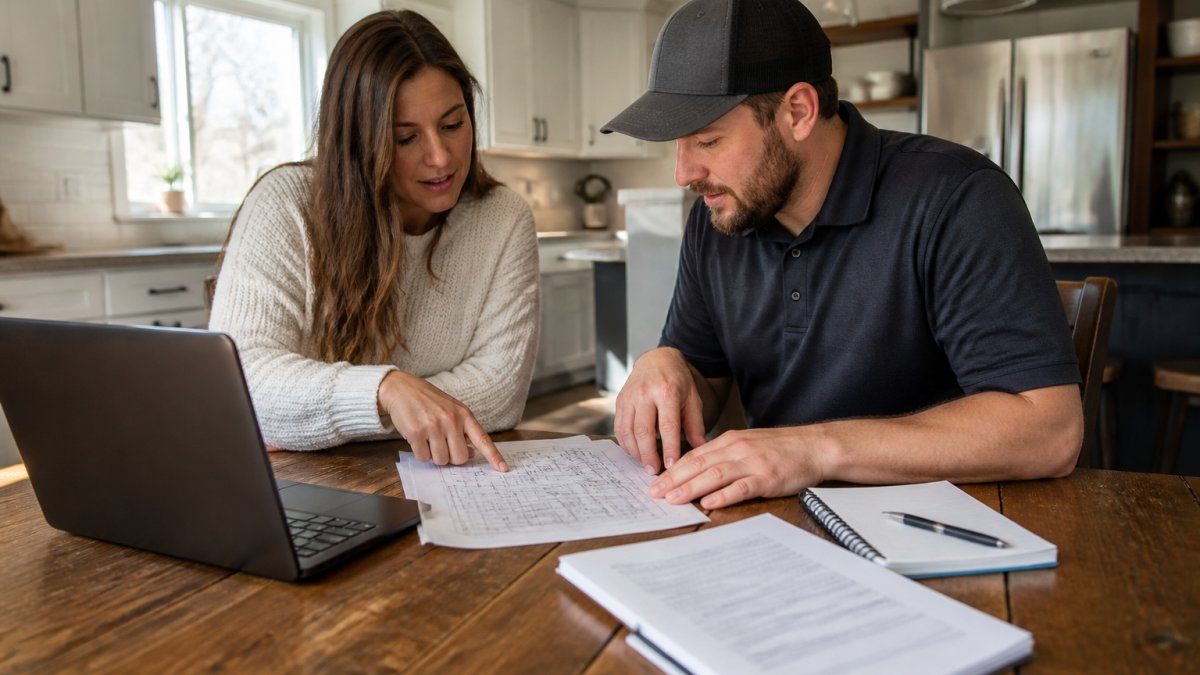
Clear communication is the foundation of any successful contractor relationship, and contractor communication issues can derail even well-planned projects. Before work begins, agree on how you’ll stay in touch to prevent misunderstandings from piling up and turning small issues into major disputes.
Choose Communication Methods That Match Your Contractor’s Workflow
Discuss preferred communication methods, email, phone, text, or project management apps, and select tools both parties will use consistently.
Ask your contractor these questions upfront:
- What’s the best way to reach you during the project?
- How often will you provide updates?
- Who should I contact if there’s an emergency?
- Will you use a shared app or system to track progress?
- How quickly can I expect responses to questions?
Digital Tools for Modern Project Communication
If your contractor is open to digital solutions, consider these approaches:
Shared project folders (Google Drive, Dropbox, OneDrive): Create subfolders for contracts, invoices, photos, and change orders with a complete audit trail.
Project management apps (Trello, Asana, Monday.com): Create task boards where contractors mark work “In Progress” or “Complete” and attach photos. Trello suits small projects; Asana scales for complex ones.
Messaging platforms (Slack, WhatsApp, SMS): Use for quick daily updates. Slack keeps conversations in one thread rather than scattered texts.
Photo documentation apps (Dropbox, Google Photos, Fieldwire): Contractors upload daily progress photos directly from their phone, creating a visual timeline.
The Communication Audit: Test Responsiveness Before Hiring
Before hiring, run a communication audit: send a detailed email with 3-4 specific project questions and note the response time. Observe whether they respond within 24 hours, provide detailed answers, ask clarifying questions, and offer options. This reveals how they communicate under pressure.
Document Communication Preferences in Writing
Document communication preferences in writing, including primary and secondary methods, expected response times, update frequency, point of contact, and how change requests will be handled. This prevents confusion and creates accountability.
This agreement becomes part of your project file and serves as a reference if disputes arise later.
Set Written Expectations for Project Timelines and Scope
Written timeline expectations eliminate guesswork. Include start date, estimated completion date, daily work hours, how weather delays are handled, and milestone dates for specific phases.
A clear scope statement prevents misunderstandings. Include materials, specific areas, prep work and cleanup responsibilities, warranty coverage, and how additional damage discoveries will be handled.
What to Include in a Roofing Contract to Prevent Disputes
A written contract protects you against miscommunication. It must include scope of work, materials list, total price and payment schedule, timeline, change order process, warranty details, contractor license and insurance proof, and dispute resolution process.
Never sign a contract with blank spaces. If your contractor resists providing details in writing, that’s a red flag.
Ask for references and follow up with them. Ask specifically about communication quality and whether the contractor stuck to timeline and budget.
Document Everything: Why Written Records Matter
Written documentation creates a clear record of agreements, completed work, and remaining tasks. Keep records of contracts, amendments, email exchanges, photos, invoices, receipts, signed change orders, inspection reports, and communication about delays or issues.
Take photos at key stages: before work starts, during major phases, and at completion. Store all documentation in one project folder. This protects you if disputes arise or you need to file an insurance claim.
How to Handle Roofing Project Delays Professionally
When delays occur, expect immediate communication with an explanation and new completion date. A contractor who disappears without explanation is creating a problem.
Your response matters too. Stay professional. Delays caused by weather or legitimate supply issues aren’t the contractor’s fault. Delays caused by poor planning or other projects taking priority are different, that’s when you escalate.
If delays become chronic:
- Request a written explanation and new timeline
- Ask what steps the contractor is taking to get back on schedule
- Discuss whether additional crew members could accelerate the work
- Review the contract’s delay provisions
Some contracts include daily penalties if the contractor exceeds the timeline. Others allow for reasonable weather delays. Know what your contract says before the delay happens.
Using Contractor Communication Templates to Stay Aligned
Contractor communication templates standardize conversations and ensure nothing falls through the cracks. These templates make it easier to ask the right questions and document responses consistently.
Use a simple template for weekly project updates. Ask your contractor to send you:
- What was completed this week
- What’s scheduled for next week
- Any issues or concerns that came up
- Photos of progress
- Updated timeline if anything has changed
For change orders, create a standard form that includes:
- Description of the change
- Reason for the change
- Cost impact
- Timeline impact
- Signature line for both parties
A change order template prevents disputes about what was agreed to and how much extra work costs. It forces both parties to think through the impact before moving forward.
When issues arise, use a problem-resolution template:
- What’s the specific issue?
- When did it occur?
- How does it affect the project?
- What solution are you proposing?
- When will it be resolved?
These templates aren’t about being rigid or legalistic. They’re about consistency. They ensure conversations stay focused and everyone remembers what was discussed.
Recognize Red Flags and Address Issues Early
Some contractor communication issues signal deeper problems that demand attention. Recognizing these red flags early lets you address problems before they become disasters.
Common Red Flags That Demand Immediate Attention
Watch for these warning signs:
- Unreturned calls or emails: If your contractor doesn’t respond within the timeframe you agreed to, that’s a problem
- Vague answers: When asked specific questions, a good contractor gives specific answers. Evasiveness suggests they’re hiding something or don’t know the answer
- Pressure to pay upfront: Legitimate contractors don’t demand full payment before starting work.
- No written documentation: Contractors who avoid putting things in writing are hiding something or lack professionalism
- Crew changes: Frequent changes in who’s working on your project suggest instability or poor planning
- Excuses instead of solutions: When problems arise, does the contractor explain what went wrong and how they’ll fix it, or just make excuses?
- Defensive responses: A professional contractor welcomes questions and feedback. A defensive one gets hostile when challenged
- Scope creep without discussion: Work expanding beyond the original agreement without written change orders
De-Escalation: How to Address Problems Without Creating Conflict
When you spot a red flag, your instinct might be to confront the contractor immediately. But emotional, accusatory conversations often make problems worse. Instead, use a structured approach to address issues calmly and productively.
Step 1: Pause and Gather Facts
Before you call or email, write down exactly what happened. Be specific:
- What was supposed to happen (reference the contract or agreement)
- What actually happened
- When it happened
- How it affects the project
- What you observed (not what you assume)
Example: Instead of “You’re never on time,” write “The crew was scheduled to arrive at 7 a.m. on Monday and Wednesday. They arrived at 8:30 a.m. both days. This delayed the inspection by two hours.”
Facts are harder to argue with than emotions. They also keep you from making accusations that might not be accurate.
Step 2: Choose the Right Communication Method
For serious issues, a phone call or in-person conversation is better than email. Email can sound accusatory even when you don’t intend it. A conversation allows for tone, clarification, and immediate problem-solving.
For minor issues or to document a conversation, follow up in writing. But start with a conversation if possible.
Step 3: Use “I” Statements and Assume Good Intent
Instead of: “You’re not following the schedule.”
Try: “I noticed the crew arrived later than scheduled on Monday and Wednesday. I want to understand what happened so we can figure out how to keep the project on track.”
This approach:
- Describes the behavior without attacking the person
- Shows you’re interested in understanding, not blaming
- Opens the door for the contractor to explain (maybe there was a legitimate reason)
- Focuses on solving the problem together
Most contractors aren’t trying to cause problems. They’re juggling multiple projects, supply issues, and weather delays. Approaching them as a partner trying to solve a shared problem is far more effective than approaching them as an adversary.
Step 4: Listen to Their Perspective
After you describe the issue, ask: “What happened from your end?” or “Help me understand what’s going on.”
There may be a legitimate explanation you’re not aware of:
- A supplier delayed materials
- A crew member called in sick
- Weather forced a schedule change
- A previous job ran over
Listening doesn’t mean accepting excuses. It means understanding the full picture before deciding how to respond.
Step 5: Propose a Solution Together
Instead of demanding a fix, ask: “How can we solve this?” or “What do you think we should do?”
Contractors often have practical solutions you wouldn’t think of. Involving them in the solution increases the likelihood they’ll actually implement it. It also shifts the dynamic from confrontation to collaboration.
If the contractor proposes something unreasonable, you can counter with your own idea. But starting with collaboration is more effective than starting with demands.
Step 6: Document the Agreement
Once you’ve agreed on a solution, send a follow-up email summarizing what you discussed:
“Thanks for taking the time to talk today. Here’s what we agreed to: [specific action], by [specific date]. I’ll follow up on [date] to confirm it’s been completed. Let me know if anything changes.”
This creates a written record and removes ambiguity about what was promised.
When to Escalate Beyond De-Escalation
De-escalation works when the contractor is willing to engage. But some situations require firmer action:
- Repeated broken promises: If you’ve addressed an issue multiple times and nothing changes, the contractor isn’t taking you seriously
- Safety violations: If the contractor or crew is doing something unsafe (improper fall protection, blocking fire exits, etc.), stop work immediately and address it in writing
- Quality issues: If work is being done incorrectly or below the standard agreed to, document it with photos and request correction in writing
- Dishonesty: If the contractor lies about what was done, what was promised, or why delays occurred, trust is broken
In these cases, move to your contract’s dispute resolution process. This might involve:
- Sending a formal written notice of the problem
- Requesting a timeline for correction
- Withholding payment until the issue is resolved (if your contract allows)
- Hiring a third-party inspector to assess the work
- Pursuing mediation or arbitration
- Terminating the contract
The Goal: Resolve Issues, Not Create Enemies
Your contractor is still working on your home. Even if you’re frustrated, maintaining a professional relationship makes the rest of the project easier. De-escalation isn’t about being a pushover, it’s about solving problems efficiently without creating unnecessary conflict.
A contractor worth hiring will respond to calm, fact-based feedback and work with you to fix problems. One who gets defensive, makes excuses, or ignores your concerns is showing you they’re not the right fit for the job.
Frequently Asked Questions
What should I document in writing to avoid contractor communication issues?
Document every agreement related to your project: the scope of work, timeline, payment schedule, materials to be used, and any changes requested. Use email or a written change order for all modifications, even verbal conversations. Keep copies of all estimates, contracts, invoices, and photos of the work at different stages. Written documentation protects both you and the contractor by creating a clear record of what was agreed upon and prevents misunderstandings about project expectations.
What are the most common signs of poor contractor communication?
Watch for contractors who are hard to reach, don’t return calls or emails within 24 hours, avoid discussing costs or timelines, won’t provide written estimates, dismiss your concerns, or make promises verbally without written confirmation. Other red flags include lack of transparency about subcontractors, unwillingness to discuss the project scope in detail, and resistance to creating a written change order when plans shift. Professional contractors welcome questions, provide regular updates, and document everything. If a contractor becomes defensive when you ask for clarity, that’s a sign to reconsider the relationship.
Should I use email, text, or phone calls for official project updates?
Use email for all official project communications and agreements. Email creates a written record that protects both you and the contractor. Text messages can be useful for quick scheduling questions, but follow up important conversations with an email summary: ‘Per our discussion today, the crew will arrive Monday at 8 a.m.’ Phone calls are helpful for urgent issues, but always document what was discussed in writing afterward. Avoid relying solely on verbal agreements. This approach ensures accountability, prevents misunderstandings, and gives you evidence if disputes arise later.
