
Table of Contents
- What Storm-Chasing Roofing Companies Are and How They Operate
- Step 1: How to Verify a Roofing Contractor’s Local Presence and Credentials
- Step 2: Questions to Ask a Roofing Contractor Before You Hire
- Step 3: Roofing Estimate Comparison and Red Flags
- Step 4: Roofing Contract Red Flags and What to Review
- Step 5: Researching Reputation and Online Reviews
- Step 6: What to Do If You’ve Already Signed or Paid a Storm Chaser
- Common Mistakes to Avoid When Hiring After Storm Damage
- Frequently Asked Questions
Last Updated: October 12, 2026
What Storm-Chasing Roofing Companies Are and How They Operate
Storm chaser roofing companies are contractors who arrive in neighborhoods after hail storms, wind damage, or severe weather events to solicit roof repair and replacement work.
These companies often use aggressive sales tactics. They may claim they’re in your area “only for a few days” or offer discounts that expire immediately.
The problem isn’t that all out-of-town contractors are dishonest. The issue is that storm chasers operate with minimal accountability.
Step 1: How to Verify a Roofing Contractor’s Local Presence and Credentials
The first defense against hiring a storm-chasing roofer is verifying they actually operate in your area. Local contractors have a reputation to protect. Storm chasers don’t.
Check Business Registration and Physical Address
Start by confirming the contractor has a real, verifiable business presence. Don’t accept a P.O. box or a cell phone number as proof of a local operation.
What to check:
- Visit the company website and look for a physical street address (not a P.O. box)
- Search the Colorado Secretary of State business database to confirm the company is registered in your state
- Call the business phone number and confirm someone answers during business hours
- Ask for their office location and offer to stop by, legitimate contractors welcome this
Storm chasers often list addresses that are actually mail forwarding services or temporary rental spaces. They may use generic 800 numbers that route to a call center in another state.
Verify License and Insurance Documentation
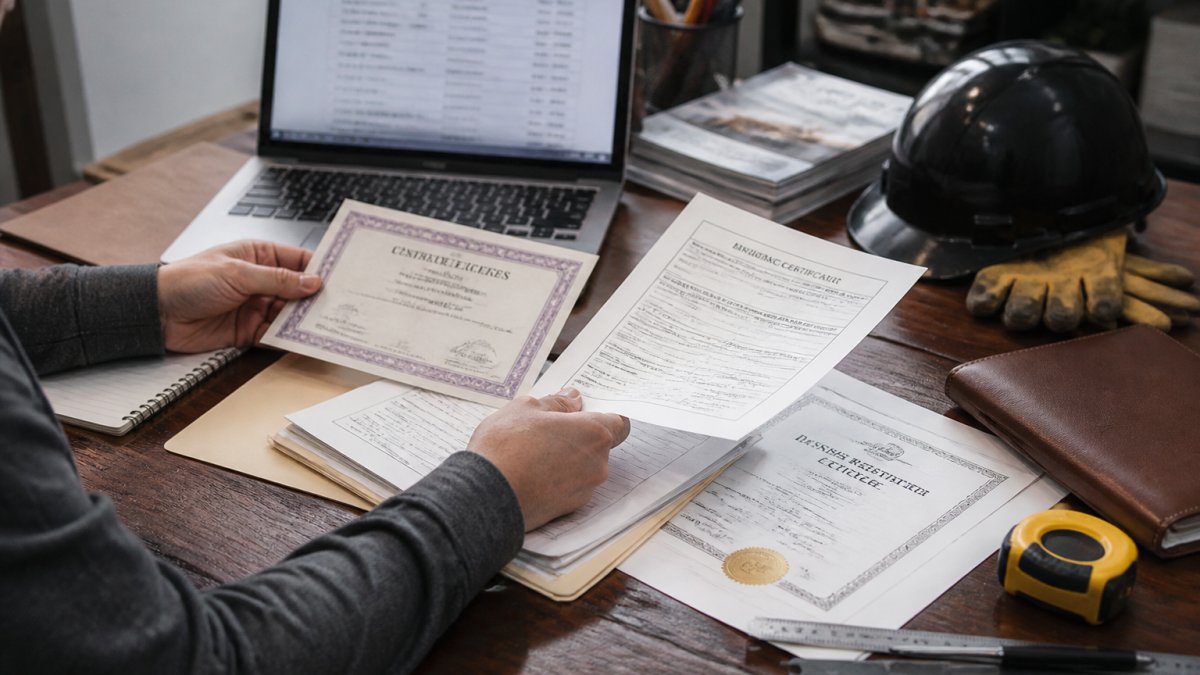
Every legitimate roofing contractor in your state must carry proper licensing and insurance. This isn’t optional, it’s how you know they’re accountable.
Required documentation:
- Roofing license: Ask to see the original license (not a copy). Verify it with the Colorado Department of Regulatory Agencies Division of Professions and Occupations to confirm it’s current and active
- General liability insurance: Request a certificate of insurance showing they carry coverage
- Workers’ compensation insurance: This is required by law if they employ workers
- Proof of bonding: A surety bond protects you if the contractor fails to complete work
Ask the contractor to email you copies of these documents. Legitimate contractors do this without hesitation. If they avoid providing documentation or claim it’s “not necessary,” that’s a major red flag.
Step 2: Questions to Ask a Roofing Contractor Before You Hire
The questions you ask reveal whether a contractor understands your local market and takes their work seriously. Storm chasers often give vague answers or rush you toward signing a contract.
Verify Local Experience and References
Ask specific questions about their local work history. A contractor with genuine experience in your area can answer these easily.
Questions to ask:
- “How long have you been operating in this area?”
- “Can you provide references from homeowners in my neighborhood?”
- “Do you have photos of roofs you’ve completed nearby?”
- “Are you familiar with how insurance adjusters operate in this region?”
Call the references they provide. Don’t just accept names, ask how you can verify the work was completed and whether the homeowner was satisfied.
Storm chasers often can’t provide local references because they don’t have any. They may offer names from other states or customers they worked with months ago in different regions.
Understand Their Insurance Claim Process
This is where Sunset Restoration and other trustworthy contractors set themselves apart. They don’t just repair roofs, they help you navigate insurance claims.
Ask about their process:
- “Will you meet with my insurance adjuster?”
- “Do you handle the claim paperwork, or is that my responsibility?”
- “What happens if the adjuster’s estimate is lower than yours?”
- “Will you advocate for additional coverage if damage is more extensive than the initial assessment?”
Legitimate contractors understand that homeowners often face lowball estimates from insurance adjusters. They’re willing to work with you to document additional damage and support your claim. Storm chasers typically won’t engage with the insurance process, they want cash upfront and want to move on to the next customer.
Step 3: Roofing Estimate Comparison and Red Flags
Getting multiple written estimates is essential. Comparing them reveals which contractors understand the scope of your damage and which ones are inflating prices or cutting corners.
What a Legitimate Written Estimate Should Include
A professional estimate isn’t just a number. It’s a detailed breakdown that shows the contractor understands your specific situation.
A proper estimate includes:
- Detailed description of materials (shingle type, brand, grade, color)
- Specific scope of work (square footage, number of layers to remove, flashing repairs)
- Labor costs separated from material costs
- Timeline for completion
If an estimate is vague (“roof repair: $5,000”) without breaking down materials, labor, or scope, that’s a warning sign. You can’t compare vague estimates, and you won’t know what you’re actually paying for.
Warning Signs in Pricing and Pressure Tactics
Storm chasers use specific pressure tactics to rush you into signing. Watch for these red flags.
Pressure tactics to avoid:
- “This offer is only good today” or “We’re leaving the area in 48 hours”
- “Sign now and we’ll discount the price by 20%”
- “We can start tomorrow if you sign the contract today”
- “Pay a deposit now and we’ll get you on the schedule”
Legitimate contractors don’t need artificial urgency. They have steady work and can schedule you based on their actual capacity. They also don’t ask for large upfront payments, they typically work on a payment schedule tied to project milestones.
Step 4: Roofing Contract Red Flags and What to Review
Before signing anything, read the entire contract carefully. Don’t let a contractor rush you or claim “it’s just standard language.”
Critical Contract Terms to Understand
Every roofing contract should include these protections for you as the homeowner.
Essential contract elements:
- Scope of work: Exactly what will be done, with specific materials listed
- Total price and payment schedule: When you pay and how much at each stage
- Start and completion dates: Timeline for the project
- Warranty information: How long coverage lasts and what’s covered
Read every line. If something is unclear, ask the contractor to explain it in writing. Never sign a contract with blank spaces or language you don’t understand.
Payment Terms and Cancellation Rights
How and when you pay matters as much as how much you pay. Protect yourself with clear payment terms.
Payment protections:
- Never pay the full amount upfront
- Typical schedule: 25-50% deposit when work starts, remainder upon completion
- Avoid paying cash or making checks payable to individuals
- Get a written receipt for every payment
- Confirm the contractor has paid suppliers before you pay the final invoice
Cancellation rights vary by state. In Colorado, you have specific protections under state consumer law.
Storm chasers often demand large upfront payments and resist discussing cancellation. They may claim “it’s company policy” or “we can’t hold your spot without payment.” This is a major warning sign.
Step 5: Researching Reputation and Online Reviews
Online reviews and reputation research give you insight into how a contractor treats customers over time.
Where to check reputation:
- Google Business Profile (look for consistent ratings and recent reviews)
- Better Business Bureau (BBB), check for complaints and how they’re resolved
- Yelp and Angie’s List for detailed customer feedback
- Local community Facebook groups where neighbors discuss contractors
- The Colorado Attorney General’s office consumer complaint database for any legal action against the company
Read both positive and negative reviews. One or two complaints are normal.
Pay attention to how the contractor responds to negative reviews. Do they engage professionally and try to resolve issues, or do they ignore complaints?
Storm chasers often have no reviews in your area because they don’t work there regularly.
Step 6: What to Do If You’ve Already Signed or Paid a Storm Chaser
If you’ve already committed to a storm-chasing roofer, don’t panic. You have options and protections.
If you’ve signed a contract:
- Review cancellation rights, most states allow a cooling-off period (typically 3-7 days)
- Contact your state’s consumer protection office to understand your specific rights
- Document everything in writing, send emails confirming your concerns and requests
- Don’t make additional payments until you’re confident in the contractor
- Get a second opinion from a local roofer about the proposed work
If you’ve already paid:
- Request a detailed accounting of how your money was spent
- Ask for proof that materials have been ordered and suppliers paid
- Confirm your insurance claim status, verify the contractor hasn’t already collected insurance money
- Consider stopping payment if work hasn’t started within the agreed timeline
- Document all communications with the contractor
If work is incomplete or poor quality:
- Take photos of the work and the damage
- Get a written inspection report from another licensed roofer
- File a complaint with your state’s licensing board
- Contact the Better Business Bureau
- Consult a consumer protection attorney if significant money is at stake
Don’t assume you’re stuck. Homeowners have legal protections, especially if a contractor misrepresents their work, fails to obtain permits, or doesn’t carry proper insurance.
Common Mistakes to Avoid When Hiring After Storm Damage
Storm damage is stressful, and stress leads to poor decisions. Avoid these common mistakes that leave homeowners vulnerable to storm chasers.
Mistakes to avoid:
- Hiring based on a knock on your door: Storm chasers find customers this way. Legitimate contractors rely on reputation and referrals
- Accepting the first estimate: Get at least three written estimates before deciding
- Skipping verification: Don’t assume a professional-looking website or business card means legitimacy
- Ignoring your gut: If something feels off about a contractor, trust that instinct
- Rushing the decision: You have time to be thorough, even if it doesn’t feel that way
At Sunset Restoration, we understand that homeowners dealing with storm damage want fast solutions. But fast doesn’t have to mean risky.
The best protection is choosing a contractor with deep local roots, a solid reputation, and a commitment to transparency.
Frequently Asked Questions
How can I tell if a roofer is a storm chaser?
Storm chaser roofing companies typically arrive in your area immediately after severe weather, use high-pressure sales tactics, offer to handle your insurance claim for you, lack a permanent local business address, and disappear once the job is done. They often advertise door-to-door or through temporary signs and promise fast cash settlements. A legitimate contractor maintains a stable local presence, provides verifiable local references, and focuses on quality workmanship rather than urgency.
What should I check before hiring a roofing contractor after a storm?
Verify their business license and insurance through your state’s licensing board. Confirm they have a permanent local business address (not a P.O. box). Ask for at least three local references from completed projects. Request a written estimate that details materials, labor, timeline, and warranty. Check online reviews on Google and the Better Business Bureau. Never sign contracts or make upfront payments without comparing multiple bids and understanding all terms.
Should I get multiple roofing estimates after storm damage?
Yes, getting multiple written estimates is essential. Compare at least three contractors to understand fair pricing and scope of work. Each estimate should detail the same materials, labor costs, timeline, and warranty terms. This allows you to identify outliers and spot red flags like unusually low bids or vague descriptions. Multiple estimates also protect you if your insurance adjuster’s assessment seems low, giving you documentation to support a claim dispute or supplement request.
Can a roofing contractor really help me with my insurance claim?
Legitimate contractors can assist by documenting damage, providing detailed repair estimates, and communicating with your insurance adjuster. However, be cautious of companies that promise to ‘fight’ your insurer or guarantee specific claim outcomes. Your contractor should advocate for fair assessment but cannot control insurance decisions. Never sign an insurance assignment that gives the contractor direct claim authority. Work with your adjuster independently, use your contractor’s expertise to support your position, and consult a public adjuster if you believe your claim was unfairly denied.
GET A QUOTE
If you’ve experienced hail, wind, or storm damage in the Denver metro area, Sunset Restoration is here to help. Our team provides honest assessments, clear communication, and expert advocacy through the insurance claim process. We handle everything from initial inspection to final completion, so you can focus on what matters. Contact us today for a free inspection and written estimate.
