
Last Updated: October 23, 2026
Quick Summary
A roofing contractor comparison between Sky Manor Roofing and Premier Roofing depends on how each handles estimates, warranties, insurance claims, and customer service. The key difference lies in transparency, advocacy with insurers, and whether the contractor stands behind their work after installation.
- Request proof of current state roofing license, liability insurance, and Workers’ Compensation coverage before hiring any contractor.
- Get written estimates from at least three companies specifying scope, materials, labor, timeline, and warranty terms in detail.
- Ask contractors directly whether they’ll advocate for you if your insurance adjuster’s estimate seems low and help challenge it.
- Verify workmanship warranty length and what’s covered, as longer warranties signal contractor confidence in installation quality.
- Call at least two recent references and ask whether they’d hire the contractor again and if projects stayed on budget and timeline.
Table of Contents
- Sky Manor vs Premier Roofing: Key Differences
- Questions to Ask a Roofing Contractor Before Hiring
- Roofing Contractor Estimate Comparison: What to Evaluate
- Roofing Contractor Warranty Comparison: Protection and Coverage
- Roof Replacement Cost Estimate: Understanding Your Quote
- Insurance Claims and Storm Damage Support
- Why Contractor Credentials and Licensing Matter
- Making Your Final Decision
- Frequently Asked Questions
Sky Manor vs Premier Roofing: Key Differences
A roofing contractor comparison like Sky Manor Roofing versus Premier Roofing comes down to how each approaches estimates, warranties, insurance claims, and customer service. Both serve the local market, but their philosophies differ in ways that affect your experience from quote to completion.
The real difference isn’t who shows up first or quotes lowest. It’s how a roofing contractor handles the details: whether they’ll advocate for you with your insurer, how transparent their estimate is, and what happens if something goes wrong after installation. At Sunset Restoration, we’ve helped homeowners understand what separates a contractor that disappears after the check clears from one that stands behind their work.
This comparison covers the factors that determine whether your project is smooth or frustrating: the questions to ask any contractor, how to evaluate estimates fairly, what warranty terms really protect you, and how to verify licensing and insurance.
Before comparing any two contractors, get written estimates from at least three companies. This gives you a baseline for pricing, scope differences, and how each contractor communicates. Never make a decision based on a single quote.
Questions to Ask a Roofing Contractor Before Hiring
The best way to evaluate a roofing contractor is to ask each one the same questions and compare answers. A quality contractor will be specific and patient.
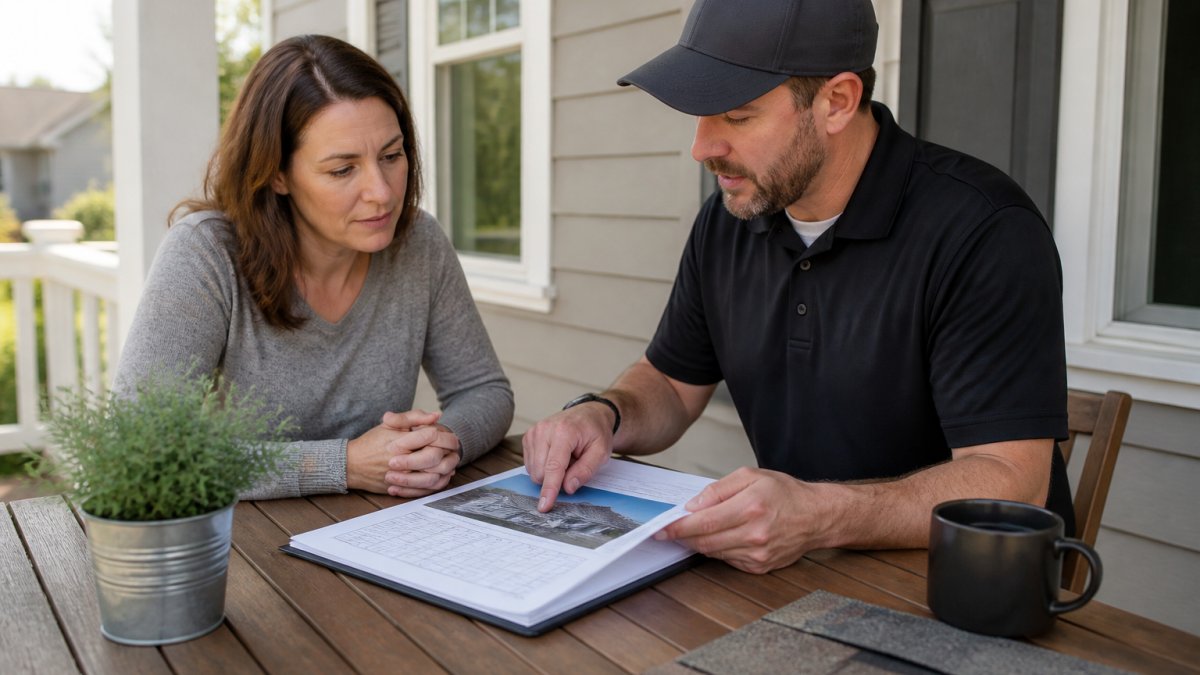
Start with licensing and insurance. Request proof of a current state roofing license, liability insurance, and Workers’ Compensation coverage.
Ask how long they’ve been in business and whether they specialize in your roof type, five years doing asphalt shingles differs from fifteen years doing metal. Request references from projects completed in the last two years and actually call them. Ask whether the contractor finished on time, stayed within budget, and whether they’d hire them again.
Clarify the timeline: how long the project takes, when they can start, and what happens with weather delays. A vague “we’ll fit you in when we can” suggests they’re overbooked.
Ask about the warranty: whether it covers materials, labor, or both, what’s excluded, and whether it transfers if you sell. Get the terms in writing before you sign anything.
Ask how they handle changes. Roof projects sometimes reveal damage invisible from the ground. Ask: if we discover additional damage during tear-off, do you get approval before proceeding, and do you charge extra?
Finally, ask about their approach to insurance claims.
Roofing Contractor Estimate Comparison: What to Evaluate
An estimate is a roadmap of what the contractor plans to do, what materials they’ll use, and what you’ll pay. A vague estimate is a warning sign.
When conducting a roofing contractor comparison by reviewing estimates from Sky Manor Roofing, Premier Roofing, or any contractor, look for these details:
Scope of Work: Does the estimate specify what’s being replaced or repaired? A good estimate says “remove existing asphalt shingles, inspect roof deck, replace damaged plywood, install new underlayment, install new architectural shingles.” A vague estimate says “new roof” and nothing else.
Materials: What brand and grade of shingles or roofing material? What type of underlayment? What about flashing, drip edge, and fasteners? Cheaper materials cost less upfront but may not last as long or perform as well in storms. The estimate should specify this.
Labor and Cleanup: Is labor included or quoted separately? Will they haul away old materials and protect your landscaping? Will they clean the site daily or only at the end?
Timeline and Contingencies: When will work start and end? What happens if weather delays the project? What if they find damage during tear-off that wasn’t visible before?
Warranty: What’s covered and for how long? We’ll detail this in the next section.
A red flag is one estimate significantly lower than the others, usually corner-cutting on materials or labor, or an underestimated scope. Ask the cheaper contractor to explain the difference. If they can’t, be cautious.
Never choose a contractor solely based on the lowest price. A cheap estimate often means lower-quality materials, rushed work, or hidden costs that appear later. Compare estimates side by side for scope, materials, and warranty, not just the bottom line.
Roofing Contractor Warranty Comparison: Protection and Coverage
A warranty protects you if something goes wrong, but not all warranties are equal.
Most roofing warranties fall into two categories: manufacturer warranties on the materials, and workmanship warranties from the contractor. You need both.
Manufacturer Warranty: Covers defects in the shingles or roofing material. A typical architectural shingle warranty lasts 20-30 years, though some offer lifetime coverage. The catch: most require installation by a certified contractor, so an uncertified installer may void your warranty.
Workmanship Warranty: Covers installation quality. Some contractors offer one year; others ten or more. Longer is better, but ask what’s covered, flashing, gutters, and ventilation, or just the shingles?
When comparing Sky Manor Roofing and Premier Roofing, get warranty terms in writing. Ask:
- How long is the workmanship warranty?
- What’s covered and excluded?
- Does it transfer to a new owner?
- What’s the process if you find a problem?
A contractor who offers a longer workmanship warranty is signaling confidence in their installation quality. They’re betting they won’t have callbacks. That’s a good sign.
The best warranty is one that’s actually backed by the contractor. Ask how many warranty claims they’ve handled and how they resolved them.
Roof Replacement Cost Estimate: Understanding Your Quote
Roof replacement cost estimates depend on roof size, materials, location, and job complexity.
Costs range widely depending on scope, so rather than guessing at a number, focus on what drives the estimate. It should break down labor, materials, and overhead clearly, ask the contractor to walk you through it line by line.
Ask whether the estimate includes:
- Removal and disposal of old roofing
- Inspection of the roof deck and replacement of damaged sections
- New underlayment and flashing
- Proper ventilation (if needed)
- Gutter work or other exterior repairs
- Cleanup and site restoration
If the estimate omits these details, ask why, they may be separate line items or bundled into labor, but you need to know.
A critical question: if the contractor finds additional damage during tear-off, will they call for approval before proceeding, and will there be an extra charge? Get this in writing before work starts, hidden mid-project costs are the biggest source of frustration.
For insurance claims, ask whether the contractor’s estimate aligns with what your insurance adjuster quoted. If there’s a gap, ask why. Sometimes contractors identify damage the adjuster missed. Sometimes the adjuster is conservative. Understanding the difference helps you make an informed decision about whether to proceed with the full scope or negotiate with your insurer.
Insurance Claims and Storm Damage Support
If you’re dealing with hail or storm damage, your contractor’s approach to insurance claims can make or break your experience.
Some contractors meet with your adjuster, document damage thoroughly, and advocate for you if the estimate seems low. Others simply quote what the adjuster approved and move on. The difference in service is dramatic.
Ask your contractor directly: “If my adjuster’s estimate seems low, will you help me challenge it?” A contractor who says yes is taking on some risk. They’re betting their documentation and expertise will convince the insurance company to approve more work.
At Sunset Restoration, we document everything thoroughly, photograph damage from multiple angles, and explain to the adjuster why additional work is necessary. Sometimes that results in a higher approved amount. Sometimes it doesn’t, but at least the homeowner knows they had an advocate.
Ask whether the contractor handles the paperwork or you submit the claim, and whether they’ll work directly with your adjuster or you’ll be the middleman. Clear communication prevents delays.
Why Contractor Credentials and Licensing Matter
A roofing contractor’s license, insurance, and certifications aren’t red tape, they’re proof someone met minimum standards and can be held accountable.
In most states, roofing contractors must be licensed, meaning they’ve passed an exam on building codes, safety, and industry standards. It’s a basic bar, not a guarantee of perfection.
Ask to see the license. Verify it’s current and in good standing. You can usually check this on your state’s licensing board website. If a contractor can’t produce a license or says they don’t need one, walk away.
Insurance is equally important. Liability insurance protects you if the contractor damages your property. Workers’ Compensation insurance protects you if a worker is injured on your property.
Some contractors carry additional certifications from roofing material manufacturers. These certifications mean the contractor has been trained on proper installation techniques for that specific product.
Finally, ask about bonding. A performance bond guarantees that if the contractor doesn’t finish the job, the bonding company will step in. Not all contractors carry bonds, but it’s another layer of protection if you’re concerned about contractor reliability.
Homeowners who want maximum protection should hire a licensed, insured, bonded contractor with manufacturer certifications and a proven track record of warranty claims handled fairly.
Making Your Final Decision
After you’ve asked questions, reviewed estimates, and verified credentials, you still need to make a choice. Here’s how to think about it.
First, eliminate any contractor who can’t produce a current license, liability insurance, or Workers’ Compensation coverage. These are non-negotiable.
Second, compare the scope of work in each estimate. Are they all proposing the same materials and approach, or are there significant differences?
Third, evaluate how each contractor communicates. Did they answer your questions thoroughly? Did they explain things clearly? Did they seem to listen to your concerns?
Fourth, check references. Call at least two homeowners who’ve used the contractor recently. Ask whether they’d hire them again.
Finally, trust your instinct. If a contractor feels evasive, dismissive, or too pushy, that’s information. A good contractor earns your trust through transparency and patience.
The choice between Sky Manor Roofing, Premier Roofing, or any other contractor ultimately depends on which one best matches your priorities.
Choosing the right roofing contractor is one of the biggest decisions you’ll make for your home’s protection. At Sunset Restoration, we specialize in residential roof replacements, storm damage restoration, and insurance claim support, with transparent estimates, comprehensive warranties, and flexible financing to fit your needs. Get a quote today and see how we approach your project differently.
Frequently Asked Questions
What’s the most important factor when comparing roofing contractors?
Licensing, insurance, and verifiable experience matter most. Before comparing services or pricing, confirm the contractor holds a current roofing license, carries liability insurance and worker’s compensation coverage, and can provide references from completed residential roofing projects. A low estimate from an unlicensed contractor can cost far more if something goes wrong.
How do I know if a roof replacement cost estimate is fair?
Get at least three detailed roof replacement cost estimates from licensed contractors. Each should itemize materials, labor, timeline, and warranty terms separately. Compare the scope of work, not just price. If one estimate is significantly lower, ask why. Differences in roofing materials, labor rates, and workmanship quality explain legitimate price variation.
What warranty terms should I ask a roofing contractor about?
Ask about both material warranty (usually 20-30 years from the manufacturer) and workmanship warranty (typically 5-10 years from the contractor). Confirm what’s covered: defects only, or also weather damage and leaks? Verify the warranty transfers if you sell your home. Get the warranty in writing before work begins.
Can a roofing contractor really help me with an insurance claim?
Yes. Experienced roofing contractors can document storm damage, prepare detailed estimates, and advocate for fair claim settlements. They understand how insurance adjusters assess damage and can point out issues the adjuster may have missed. However, they work for you, not the insurance company. Choose a contractor experienced in insurance restoration who communicates clearly throughout the process.

