
Table of Contents
- Start With a Roof Inspection Before You Call Anyone
- How to Document Hail Damage on a Roof
- Review Your Policy Before You File the Hail Damage Claim
- The Roof Insurance Claim Adjuster Inspection, Explained
- Your Roof Hail Damage Claim Timeline From Start to Finish
- Temporary Repairs, Receipts, and Protecting the House
- Hail Damage Roof Claim Denial Appeal: What to Do Next
- Choosing a Contractor Without Getting Burned
- Frequently Asked Questions
Last Updated: October 18, 2026
Start With a Roof Inspection Before You Call Anyone
A roof inspection comes first because the evidence has to exist before the phone call does.
Hail damage is physical damage caused by frozen precipitation striking shingles, flashing, gutters, and siding hard enough to crack, dent, or loosen the material.
A common mistake is calling the insurer the morning after a storm, before anyone has been on the roof.
- Walk the yard first and photograph anything on the ground
- Look for dents in gutters, downspouts, and vents
- Check siding and window screens on each side of the house
What Hail Actually Does to Shingles, Gutters, and Siding
Asphalt shingles take hail three ways: the mat cracks, granules loosen, or the shingle bruises and loses its seal.
Metal dents differently: gutters, downspouts, and vents dent, while siding cracks or chips, often on the storm-facing side.
Damage is rarely uniform: one slope can be shredded while the opposite looks untouched. That asymmetry is useful evidence.
Telling Storm Damage Apart From Normal Wear
Normal wear is even; storm damage is random and clustered.
Aging shingles curl, crack in straight lines, and lose granules evenly. Hail hits leave round or irregular marks with soft spots underneath and dark exposed mat in the center, clustering on storm-facing slopes.
Pre-existing wear is excluded from coverage; hail damage is not. If an adjuster can’t tell the difference, they’ll lean toward wear, your photos settle it.
Never let a contractor or adjuster talk you into signing anything before you’ve seen the inspection findings yourself. Once you sign an assignment of benefits or a contingency agreement, you may hand over control of your claim and its payout.
How to Document Hail Damage on a Roof
Document hail damage on a roof by photographing every affected surface with something for scale, noting the storm date, and keeping a written log.
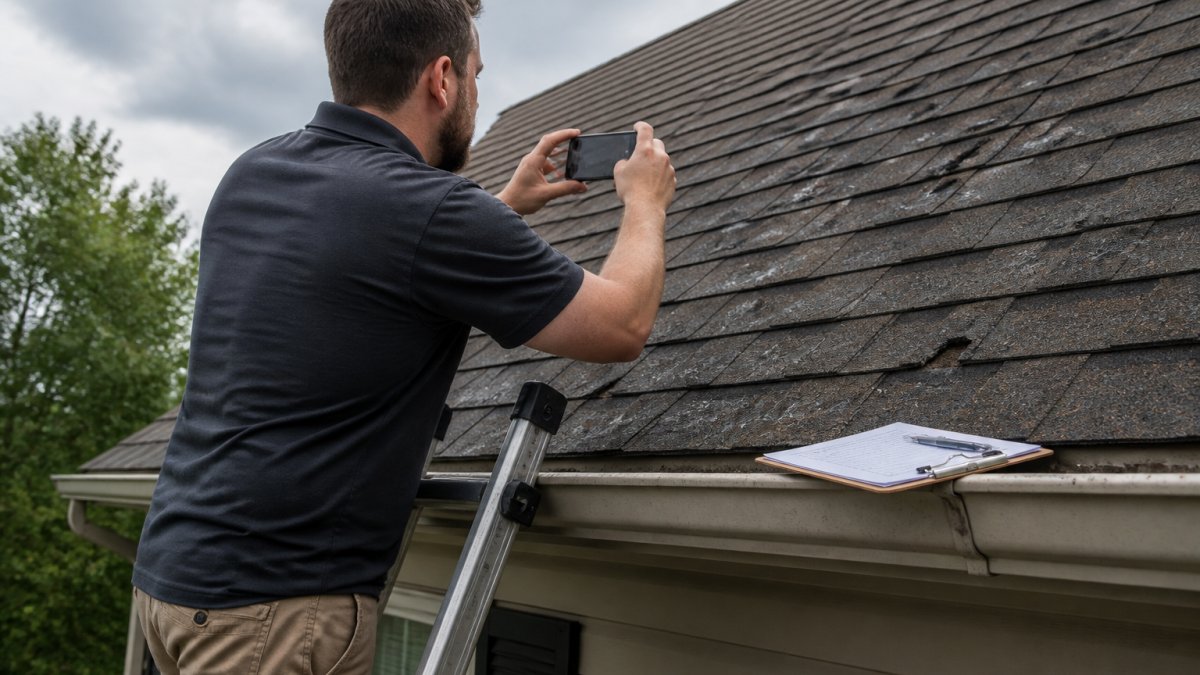
Work through this checklist before anyone else touches the roof:
- Photograph each roof slope from the ground with a wide shot
- Take close-ups of dents, cracks, and granule loss with a tape measure or coin for scale
- Photograph dented gutters, downspouts, vents, and flashing
Timestamped photos carry far more weight than undated ones. Most phones stamp automatically, but confirm it first.
Don’t get on the roof yourself. Ladder falls are a real risk, and an inspector can reach areas you can’t see from the edge.
Review Your Policy Before You File the Hail Damage Claim
Read your policy before you file because the policy, not the damage, sets what gets paid. Look for four things: deductible, coverage limits, actual cash value vs. replacement cost, and filing deadlines.
Pull the declarations page first. It’s the summary sheet at the front of the policy and it answers most of your questions in one place.
Deductibles, Coverage Limits, and the Repair Cost Gap
Your deductible is what you pay before the insurer pays anything.
Coverage limits cap what the insurer will pay; a limit too low for full replacement creates a gap you cover yourself.
Many policies carry a separate, higher deductible for wind and hail than for other perils. Check that line before assuming your standard deductible applies.
Actual Cash Value vs. Replacement Cost
Actual cash value pays today’s value minus depreciation. Replacement cost pays what it actually costs to replace the roof with new materials.
The difference is the depreciation holdback, often the biggest gap in a settlement.
If your policy is replacement cost, don’t settle for the initial actual cash value check without asking how and when the holdback gets released.
The Roof Insurance Claim Adjuster Inspection, Explained
The adjuster inspection is the insurer’s own look at the damage, and it’s where the claim is effectively decided. The adjuster inspects the roof, measures damaged areas, and writes an estimate of what the insurer will pay. Understanding how that estimate is built is the difference between accepting a first number and getting the full scope covered.
You should be there. Not to argue, but to point out what you documented.
- Have your photo log ready and walk the adjuster through it
- Point out damage on every slope, not just the obvious one
- Ask what’s included in the estimate and what isn’t
How the Adjuster Builds the Estimate
Most adjusters work from a standardized estimating platform that prices line items, tear-off, underlayment, shingles, ridge cap, flashing, drip edge, vents, labor, and disposal, using a regional price list.
That’s why the first estimate is a starting point, not a final number. Common omissions include:
- Flashing around chimneys, skylights, and wall intersections
- Ridge caps and starter strips
- Code-required upgrades such as ice-and-water shield or upgraded underlayment
A roofing contractor who knows the claim process can review the estimate line by line and submit a supplement for anything left out.
The Depreciation Holdback at the Adjuster Stage
If your policy pays replacement cost, the adjuster’s first estimate typically shows two numbers: replacement cost value and actual cash value after depreciation. The insurer usually pays the actual cash value first and holds back depreciation until the work is complete and invoiced.
Ask the adjuster directly: what is the depreciation amount, and what documentation triggers its release? Get it in writing.
Before the adjuster leaves, ask them to note in the file any damage you pointed out that they did not include. A written note creates a record you can reference in a supplement request.
What to Do After the Adjuster Visit
- Compare the adjuster’s estimate against your photo log and your contractor’s scope
- Ask your contractor to itemize anything missing and submit it with photos
- Confirm the depreciation release terms and the deadline for supplemental claims
The adjuster’s estimate and your contractor’s estimate are supposed to be reconciled, not chosen between. The strongest position is a line-by-line comparison showing exactly what the insurer’s estimate left out.
Your Roof Hail Damage Claim Timeline From Start to Finish
A roof hail damage claim typically moves through inspection, filing, adjuster visit, estimate, and repair, with the pace set by your insurer and your policy’s deadlines.
| Stage | What Happens | What You Do |
|---|---|---|
| 1. Inspection | Roof and exterior checked for damage | Photograph everything, log the storm date |
| 2. Policy review | Coverage, deductible, and limits confirmed | Read the declarations page |
| 3. Claim filed | Insurer opens the claim and assigns a number | Keep the claim number handy |
| 4. Adjuster visit | Insurer inspects and writes an estimate | Attend, share your documentation |
| 5. Estimate review | Scope and pricing reviewed | Have a contractor check for missing items |
| 6. Approval and payment | Insurer approves and issues payment | Confirm depreciation release terms |
| 7. Repair | Work scheduled and completed | Keep all receipts and the contract |
Two timing traps catch people. Policies and state rules set limits on how long you have to file after the date of loss, so don’t sit on a claim for months.
Ask your insurer in writing what your policy’s deadline is for filing and for submitting supplemental claims. Getting that answer by email creates a record and stops the “you waited too long” conversation before it starts.
::: Securing this documentation early provides a necessary foundation if you eventually find yourself appealing denied claims after an initial rejection.
Temporary Repairs, Receipts, and Protecting the House
Temporary repairs are allowed and often expected, but they need to be reasonable and documented. If your roof is leaking, most policies require you to prevent further damage.
- Photograph the damage before any temporary repair
- Keep every receipt for tarps, materials, and labor
- Don’t make permanent repairs before the adjuster sees the damage
Insurers pay for reasonable steps to stop ongoing damage but push back on work that looks like it was done to inflate the claim or that removes evidence they need.
Hail Damage Roof Claim Denial Appeal: What to Do Next
A denial is not the end of the claim. You can appeal, and a hail damage roof claim denial appeal usually succeeds when it’s built on better evidence than the first submission. Insurers deny for wear instead of storm damage, damage below the deductible, or gaps in documentation. Force the insurer to state its reason in writing, then answer that reason with evidence.
Step 1: Get the Written Basis for the Denial
Read the denial letter carefully and find the stated reason. If the letter is vague, “damage does not meet the threshold” or “consistent with normal wear”, request the adjuster’s full report and estimate in writing. You are entitled to know what the insurer relied on. A written request creates a record and often prompts a more specific response.
Step 2: Build an Independent Record
Get an independent inspection from a licensed roofing contractor who will put findings in writing. The report should:
- Identify specific damage by slope, material, and location
- Distinguish storm damage from wear with photos and notes
- Include measurements and a line-item repair scope
Step 3: Submit a Written Appeal
A strong appeal is a comparison, not a complaint. Structure it as:
- A short cover letter stating the claim number and the denial reason you are disputing
- The adjuster’s estimate and the contractor’s estimate side by side, item by item
- New photos with timestamps and scale references
- A line-by-line rebuttal of each reason given for denial
- A request for reconsideration and a response deadline
Underpayment is a quieter version of the same problem. If the estimate misses flashing, code upgrades, or an entire slope, a supplement request is the right move, not a full appeal. Ask your contractor to itemize what’s missing and submit it with photos.
The strongest appeal is a comparison, not a complaint. Put the adjuster’s estimate next to an independent contractor’s estimate, item by item, and let the gap speak.
Step 4: Use the Appraisal Clause
If the dispute continues, most policies include an appraisal clause that lets both sides hire their own appraisers. Ask your insurer whether yours does and request the clause in writing. Appraisal is typically faster and cheaper than litigation, and it is decided on the scope and value of the loss, not on coverage questions.
Step 5: Escalate to the State Regulator
Every state has an insurance department that accepts consumer complaints. If the insurer is unresponsive or the appraisal process stalls, filing a complaint with your state’s insurance department creates an external record and often gets a response. Check your state insurance department’s website for the complaint process and any timelines that apply.
What Not to Do
- Don’t cash a settlement check you believe is too low without noting your objection in writing
- Don’t sign a release or proof-of-loss form you don’t understand
- Don’t let a contractor file the appeal on your behalf without reviewing it first
A denial or underpayment is a negotiation with defined steps. Document each one, keep everything in writing, and escalate in order rather than jumping to the loudest option first.
Choosing a Contractor Without Getting Burned
Choose a licensed, local contractor with a physical address, verifiable references, and a written contract that spells out scope, materials, and payment terms.
Ask these questions before you sign:
- Are you licensed and insured, and can I see proof?
- Do you have a local address and references I can call?
- Will you put the scope of work and payment schedule in writing?
Be wary of anyone who offers to “handle everything” and asks you to sign over your claim rights, or who quotes a price that exactly matches your deductible. Both are warning signs.
This is where a family-owned local contractor earns its keep. We also offer flexible financing, including interest-free options for qualified homeowners, so a needed repair doesn’t have to wait on a settlement check.
Frequently Asked Questions
Does homeowners insurance cover roof hail damage?
In most standard homeowners policies, hail is a covered peril, so roof damage from a hailstorm is typically eligible for a hail damage claim. What gets paid depends on your deductible, your coverage type, and whether the damage exceeds normal wear. Policies differ on cosmetic damage and on how old shingles are valued, so read the declarations page and the exclusions before you file.
How long do I have to file a roof hail damage claim?
Deadlines come from two places: your policy and your state’s rules. Many policies require prompt notice, often within a year of the date of loss, and some states set their own limits for storm claims. Missing the window can sink an otherwise valid hail damage claim, so note the storm date, check your policy language, and call your insurer early rather than waiting for a contractor to be available.
What should I do before the insurance adjuster inspects my roof?
Photograph everything first: wide shots of each slope, close-ups of dents and cracked shingles, plus gutters, siding, and any interior stains. Write down the storm date and keep a damage log. Clear access to the attic and yard, and have your policy number ready. If you hire a roofing contractor, ask them to attend the roof insurance claim adjuster inspection so both people see the same damage at the same time.
What if the insurance adjuster denies my hail damage claim?
Ask for the denial in writing with the specific reason cited. Then compare it against your own photos and inspection report. A hail damage roof claim denial appeal usually starts with a written request for reconsideration backed by timestamped photos, a contractor’s damage assessment, and the storm date. If that fails, ask about the appraisal clause in your policy or contact your state’s insurance department for guidance.
A hail claim is a paperwork problem wearing a roofing problem’s clothes. The homeowners who come out ahead are the ones who document early, read their policy, and keep a contractor in their corner who knows how adjusters write estimates. If you’re staring at a damaged roof and a claim number you don’t understand, get a quote from Sunset Restoration. We’ll inspect the roof, document what we find, and tell you honestly what your claim should cover.
