
Table of Contents
- Why Insurance Companies Use Lowball Tactics
- Documenting Storm Damage for Insurance Claims
- How to Review a Settlement Offer From Your Insurance Adjuster
- Steps to Take After Receiving a Lowball Offer
- How to Write a Demand Letter for Insurance Claim
- Hiring a Public Adjuster for Roof Damage
- When to Pursue Legal Action
- Frequently Asked Questions
Last Updated: October 2, 2026
Why Insurance Companies Use Lowball Tactics
Insurance companies often make initial settlement offers that fall short of your actual damages, when an insurance adjuster lowballs a claim, they’re testing your resolve. They’re betting you’ll accept the first number without pushing back. Adjusters have quotas to close claims quickly and minimize payouts, every dollar saved increases profit margins.
When an insurance adjuster lowballs claim, they’re testing your resolve. Most homeowners accept because they don’t know they can negotiate. They assume the estimate is final, it’s not.
The adjuster inspects your damage, writes a report, and submits an estimate. But estimates vary wildly depending on who’s inspecting. An adjuster under pressure to minimize payouts will miss damage, use outdated pricing, and apply depreciation too aggressively. Your job is to prove they got it wrong.
Documenting Storm Damage for Insurance Claims
Documentation is everything. Without it, you have no use in negotiations. With it, you have proof.
Start documenting immediately. Take photos and videos in daylight from multiple angles, wide shots of overall damage and close-ups of specific issues like missing shingles, dents, or cracks.
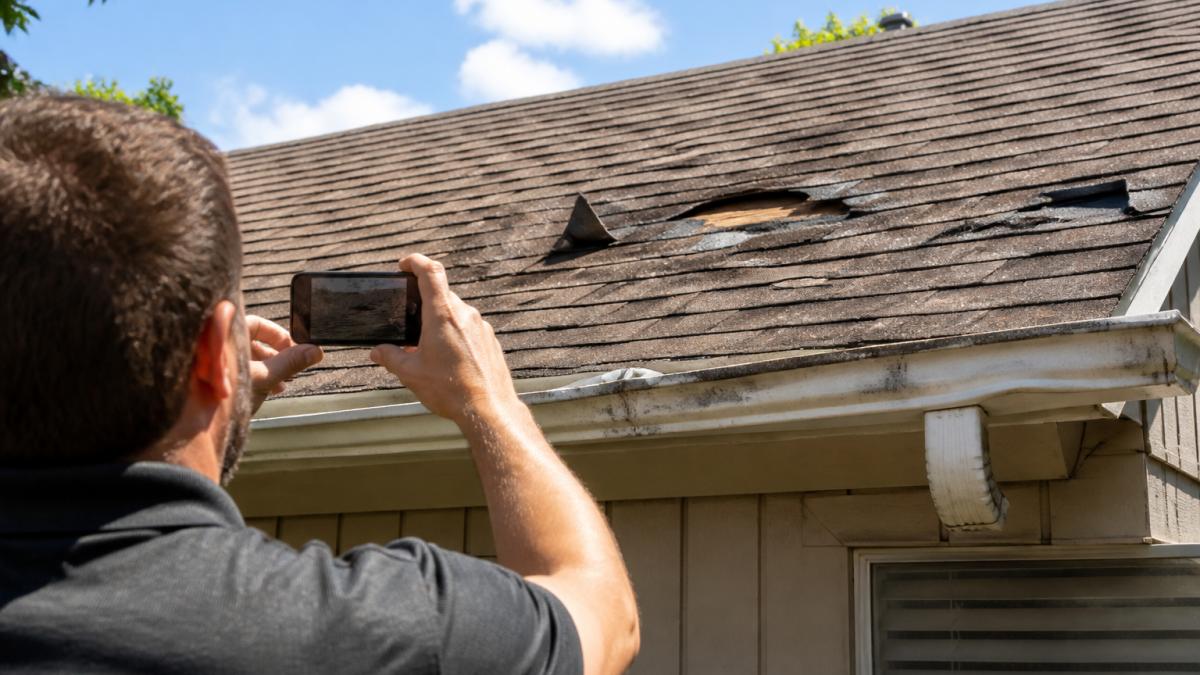
Create a written inventory listing every damaged item with descriptions, date, weather conditions, and temporary repairs made. Save receipts for emergency repairs and tarping, these expenses are recoverable.
Collect detailed, itemized repair estimates from at least two licensed contractors for major damage. These become evidence of fair market value.
Keep all communications with your insurance company, emails, letters, phone notes, adjuster name, inspection date, and statements. Store everything digitally and physically, backed up to cloud storage. This becomes your negotiating toolkit.
How to Review a Settlement Offer From Your Insurance Adjuster
When you receive a settlement offer, don’t sign immediately. Review it systematically to identify gaps and valuation disputes that may trigger appraisal rights.
Compare Line-by-Line Against Your Documentation
Compare the adjuster’s estimate with your contractor estimates side-by-side. Adjusters frequently overlook secondary damage. A hail storm damaging your roof also damages gutters, downspouts, siding, windows, and fascia. Check whether the estimate includes roof, gutters, siding, windows, soffit, fascia, interior water damage, temporary repairs, and debris removal. Note any missing items with documented evidence.
Examine the Depreciation Applied
Most lowball offers hide depreciation. Insurance companies apply it to reduce payouts, but their tables are often outdated or incorrect. An adjuster might depreciate a five-year-old roof by 40 percent assuming a 20-year lifespan, when the actual lifespan is 25 years. Well-maintained materials shouldn’t face aggressive depreciation.
Request the adjuster’s depreciation schedule in writing, asking what lifespan and condition rating they assigned and how it compares to industry standards. If aggressive, your contractor can provide a counter-estimate. This discrepancy often grounds appraisal.
Verify the Scope of Work Matches the Damage
If the adjuster inspected for only 30 minutes, they likely missed hidden damage like interior water damage, structural issues, and wall damage. Review their inspection notes. If cursory, request a reinspection and be present to point out overlooked areas.
Check for Policy Exclusions and Deductible Misapplication
Read your policy carefully. Some have separate deductibles for wind or hail (2-5 percent of insured value), exclude water damage unless wind-driven, or limit certain items. If the adjuster applied an exclusion you dispute, cite policy language and request clarification.
Identify Valuation Discrepancies That Trigger Appraisal Rights
Most policies include an appraisal clause allowing a neutral third party to resolve claim value disputes. You have appraisal rights if the adjuster’s estimate is significantly lower than your contractor’s (typically $5,000+ gap), excluded covered items, or applied unreasonable depreciation. Adjusters know appraisers side with documented evidence, so the threat of appraisal often motivates higher offers.
Request Written Justification
If the offer seems low, request an explanation in writing. Ask the adjuster to justify specific line items, depreciation amounts, and exclusions. Ask them to explain what they inspected and what they didn’t. This creates a record and often reveals weak points in their estimate.
If their written response doesn’t adequately address your concerns, you have grounds to invoke appraisal or escalate to management.
Steps to Take After Receiving a Lowball Offer
A lowball offer is negotiable, but negotiation requires strategy. Here’s your action plan with specific language you can use at each stage.
Step 1: Gather Your Evidence
Compile all documentation, photos, videos, contractor estimates, receipts, and your written inventory. Organize it chronologically. This is your case. Create a summary document that lists the adjuster’s offer line-by-line alongside your contractor estimates, showing the dollar gap for each item.
Step 2: Make the Initial Phone Call
Don’t accept the offer passively. Call the claims adjuster within 48 hours of receiving it. Use this script:
“I’ve reviewed the settlement offer for claim [number]. I appreciate the inspection, but I’ve identified several discrepancies between your estimate and the actual damage. I have contractor estimates that show [specific item] wasn’t included, and the depreciation applied to [specific item] doesn’t reflect current replacement costs. I’d like to discuss these gaps with you before we proceed. Can we schedule a time this week to walk through my documentation?”
This approach is professional, specific, and positions you as informed, not emotional. Adjusters respond differently to claimants who cite evidence versus those who simply say “your offer is too low.”
Step 3: Request a Detailed Written Explanation
If the adjuster resists on the phone, follow up with an email requesting written justification for specific line items. Ask:
- “Please provide the depreciation percentage applied to [item] and the formula used to calculate it.”
- “The estimate lists [item] as excluded. Please cite the policy language that excludes this.”
- “Your inspection lasted [X minutes]. Please list all areas inspected and all areas not inspected.”
This creates a paper trail and often prompts the adjuster to reconsider. Many lowball offers rely on the claimant not asking hard questions.
Step 4: Submit a Formal Written Response
Write a demand letter (see section below) and send it via certified mail. In the letter, reference the phone conversation and the adjuster’s written responses. State: “Based on the documentation attached, the fair settlement for this claim is [your amount], not [their amount]. The difference of [gap] represents [specific items] that were undervalued or omitted.”
Step 5: Request an Independent Appraisal
Most homeowner policies include an appraisal clause. If you and the insurer can’t agree on the claim value, either party can invoke appraisal. This is a powerful leverage point that many claimants don’t use. In appraisal, a neutral third-party appraiser reviews both the adjuster’s estimate and your contractor’s estimate, then issues a binding decision on the claim value. The insurer pays half the appraisal cost; you pay half. Typical appraisal costs range from $500 to $2,000 depending on claim complexity.
To initiate appraisal, send a written request to your insurance company stating: “I am invoking the appraisal provision in my policy. I believe the claim value is [your amount]. Please advise on the appraisal process and timeline.”
Appraisal is especially effective when you have contractor estimates supporting your position. Adjusters know that an appraiser will likely side with documented evidence, so the threat of appraisal often motivates settlement negotiations.
Step 6: Escalate Within the Insurance Company
If the claims adjuster won’t budge after appraisal is mentioned, request to speak with their supervisor or the claims manager. Use this language: “I’ve provided detailed documentation supporting a higher settlement. The adjuster has not addressed the specific gaps I’ve identified. I’d like to escalate this to management for review.”
Most insurance companies have internal appeal processes. Use them before considering legal action.
Step 7: Hire a Public Adjuster or Attorney (If Necessary)
If internal escalation fails, consult a public adjuster for claims over $10,000 or an attorney if you suspect bad faith.
How to Write a Demand Letter for Insurance Claim
A demand letter is a formal request for increased compensation. It’s stronger than a phone call and creates a paper trail.
Hiring a Public Adjuster for Roof Damage
A public adjuster is a licensed professional who advocates for policyholders. They work for you, not the insurance company.
When to Pursue Legal Action
Legal action makes sense when the insurance company has acted in bad faith or when the settlement gap is substantial.
Consult an attorney if:
- The insurer refuses to cover clearly covered damage
- They ignored your documentation without explanation
- They delayed the claims process unreasonably
- They made multiple lowball offers despite evidence
- A public adjuster’s negotiation didn’t resolve the gap
Frequently Asked Questions
What should I do immediately after an insurance adjuster gives me a lowball settlement offer?
Don’t accept or sign anything immediately. Request a detailed written valuation report that itemizes every damage and repair cost. Review it against your own documentation, repair estimates from licensed contractors, and comparable repair costs in your area. Take 5-7 business days to gather additional evidence. If the offer still falls short, file a formal appeal with your insurance company in writing, citing specific discrepancies between their valuation and your supporting documentation.
How do I know if my insurance adjuster’s estimate is actually lowball or fair?
Obtain independent repair estimates from at least two licensed contractors who specialize in your type of damage (roof, siding, windows, etc.). Compare these estimates against the insurance adjuster’s valuation report line-by-line. Check fair market value using comparable repair costs in your area. If contractor estimates exceed the adjuster’s offer by 15% or more, or if the adjuster omitted damage categories you documented, the offer likely is lowball. Bad faith practices include refusing to acknowledge documented damage or using outdated depreciation schedules.
What is a demand letter and how does it help with a lowball insurance claim?
A demand letter is a formal written request to your insurance company to increase their settlement offer. It documents the gap between their valuation and fair market value, cites your evidence (photos, contractor estimates, repair quotes), references your policy terms, and requests a specific revised amount. A well-constructed demand letter creates an official record of your dispute, demonstrates you’re serious about pursuing the claim, and often prompts insurers to reconsider their initial offer to avoid litigation costs or bad faith claims.
Should I hire a public adjuster if my insurance company lowballed me?
A public adjuster can help if your claim is complex, involves significant damage, or your insurer refuses to budge. Public adjusters are licensed professionals who investigate claims independently, negotiate on your behalf, and typically charge 5-10% of the settlement increase they secure. They’re most valuable for total loss claims, multi-category damage (roof, siding, interior), or when you lack time or expertise to fight the claim yourself. However, for straightforward, smaller claims, you may resolve the dispute directly with a demand letter and contractor documentation.
